
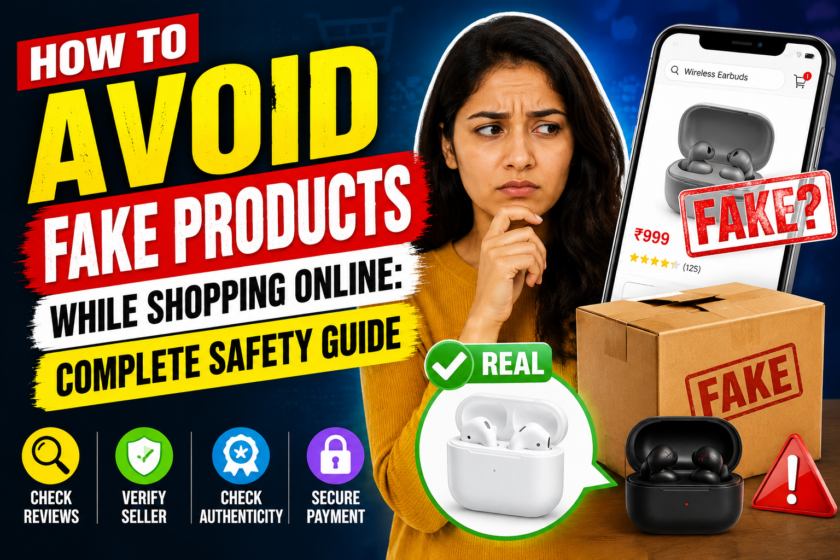
Online shopping has become a normal part of daily life, How to Avoid Fake Products While Shopping Online.
People buy clothes, shoes, gadgets, beauty products, home items, kitchen tools, and many other things from online stores.
Online shopping is easy, fast, and convenient.
But there is one big problem that many buyers face.
That problem is fake products.
Fake products can look attractive in photos, but they may be poor in quality.
Sometimes fake products use copied brand names, duplicate packaging, and misleading descriptions.
This can confuse customers and make them waste money.
That is why learning how to avoid fake products while shopping online is very important.
A smart buyer should not only look at discounts.
A smart buyer should also check the seller, reviews, product details, return policy, and price.
In this article, you will learn simple and useful ways to identify fake products and shop safely online.
Why Fake Products Are a Big Problem
Fake products are not only a waste of money.
They can also create safety and quality issues.
For example, a fake charger may damage your phone.
A fake skincare product may harm your skin.
A fake shoe may not last long.
A fake electronic item may stop working within a few days.
Many fake products are made with low-quality materials.
They may look similar to original products, but their performance is usually poor.
This is why you should always be careful before buying anything online.
If you know how to avoid fake products while shopping online, you can protect your money and make better buying decisions.
1. Buy From Trusted Websites
The first step is to buy from trusted shopping websites.
Popular and reputed platforms usually have better seller verification systems.
They also provide return, refund, and customer support options.
However, even on big platforms, fake products can sometimes appear.
So, do not trust a product only because it is listed on a famous website.
Check the seller, reviews, description, and return policy before buying.
If you are buying from a new or unknown website, be extra careful.
Check whether the website has contact details, customer support, privacy policy, and secure payment options.
Avoid websites that look incomplete, copied, or suspicious.
2. Check the Seller Rating
Before buying any product, always check the seller rating.
The seller rating shows how other customers experienced that seller.
A good seller usually has positive reviews, high ratings, and a history of successful orders.
Avoid sellers with very low ratings or too many complaints.
Also check how long the seller has been active.
A new seller is not always bad, but you should be careful if the product is expensive or branded.
If many buyers complain about fake items, damaged products, or poor service, avoid that seller.
Seller reputation is one of the most important things in safe online shopping.
3. Read Product Reviews Carefully
Reviews can help you understand whether a product is genuine or fake.
But do not only look at the star rating.
Sometimes fake products have fake positive reviews.
Read detailed customer reviews before buying.
Look for reviews that mention product quality, packaging, size, performance, and brand authenticity.
Customer photos are also helpful.
If many buyers say the product is fake, duplicate, or different from the image, do not buy it.
Also read negative reviews.
Negative reviews often reveal the real problems with a product.
If reviews look repeated, too perfect, or copied, they may not be genuine.
4. Compare the Price With Other Websites
Very low prices can be a warning sign.
If a branded product is available at a much lower price than usual, check carefully.
Sometimes sellers use heavy discounts to attract buyers to fake products.
For example, if a product usually costs a high amount but one seller offers it at an extremely cheap price, there may be something wrong.
Compare the same product on two or three trusted websites.
Check the average market price.
A good discount is fine, but an unbelievable discount can be risky.
Remember, the cheapest product is not always the best product.
5. Check Product Images Properly
Product images can give important clues.
Fake products often use copied or edited images.
Sometimes the image looks like the original product, but the delivered item is different.
Zoom in on the product images if possible.
Check the logo, spelling, packaging, design, and color.
Fake products may have spelling mistakes or poor-quality printing.
Also check whether the product images are clear and professional.
If the listing has only one image or blurry photos, be careful.
For branded items, compare the images with the official brand website if possible.
6. Read the Product Description
Many buyers ignore the product description.
This is a mistake.
The product description contains important details such as material, size, features, warranty, brand name, and package contents.
Fake product listings often have incomplete or confusing descriptions.
Sometimes the title says one thing, but the description says something else.
Read everything carefully before buying.
Check whether the brand name is written correctly.
Look for words like “first copy,” “replica,” “inspired,” or “compatible style.”
These words may indicate that the product is not original.
7. Check Warranty Details
Warranty is very important, especially for electronics, appliances, watches, gadgets, and branded products.
Original products usually come with proper warranty information.
Fake products may not include a valid warranty.
Before buying, check whether the product has brand warranty or seller warranty.
Brand warranty is usually better because it is supported by the official company.
Also check the warranty period and service process.
If a product claims to be branded but has no warranty details, avoid it.
Warranty information can help you identify whether the product is genuine.
8. Avoid Unknown Payment Links
Never pay through suspicious payment links.
Trusted shopping platforms provide secure checkout pages.
If a seller asks you to pay outside the platform, be careful.
Some fraud sellers offer extra discounts if you pay directly through UPI, bank transfer, or unknown links.
This can be risky because you may not get buyer protection.
Always complete payment through the official website or app.
Use secure payment methods.
If possible, choose cash on delivery for new sellers or unknown websites.
This can reduce risk.
9. Check Return and Refund Policy
Before placing an order, always check the return and refund policy.
If the product is fake, damaged, or different from the description, you should be able to return it.
Avoid products with no return option, especially if they are expensive.
Some categories may have limited returns, so read the policy carefully.
Check the return window, refund method, replacement option, and pickup process.
A clear return policy gives you confidence while shopping.
If a seller does not allow returns, think twice before buying.
10. Check Packaging After Delivery
Your work does not end after placing the order.
When the product arrives, check the packaging carefully.
Original products usually have proper packaging, barcode, serial number, manufacturing details, and brand information.
Fake products may have poor packaging, broken seals, spelling mistakes, or missing labels.
If the packaging looks suspicious, take photos or record an unboxing video.
This can help if you need to return the product or raise a complaint.
Do not throw away the box immediately.
Keep the packaging until you are sure the product is genuine and working properly.
11. Verify Serial Number or QR Code
Many branded products come with serial numbers, QR codes, or authenticity labels.
Use these details to verify the product.
Some brands allow customers to check authenticity on their official website or app.
If the serial number is missing, invalid, or already used, the product may be fake.
This is especially important for electronics, shoes, watches, bags, beauty products, and expensive accessories.
Verification may take only a few minutes, but it can save your money.
12. Be Careful With Beauty and Health Products
Beauty and health products need extra attention.
Fake cosmetics, skincare items, supplements, and personal care products can be harmful.
Always buy these items from trusted sellers or official brand stores.
Check expiry date, manufacturing date, ingredients, seal, and packaging.
Avoid products with damaged packaging or missing labels.
Do not use a product if its smell, color, or texture looks unusual.
When it comes to skin and health, saving a little money is not worth the risk.
Buying Guide: Safe Online Shopping Checklist
Before buying any product online, follow this simple checklist.
First, check whether the website is trusted.
Second, check the seller rating and reviews.
Third, compare the product price with other websites.
Fourth, read the full product description.
Fifth, check warranty and return policy.
Sixth, avoid sellers who ask for outside payment.
Seventh, inspect the product carefully after delivery.
This checklist can help you understand how to avoid fake products while shopping online in a simple way.
If you follow these steps, your chances of buying fake products will become much lower.
FAQs
1. How can I know if a product is fake online?
You can check seller ratings, customer reviews, product images, price, description, warranty, and packaging.
If the price is too low or reviews mention fake products, avoid buying it.
2. Are all cheap products fake?
No, all cheap products are not fake.
Some products are affordable because of offers or discounts.
But if a branded product is extremely cheap compared to other websites, be careful.
3. Should I trust customer reviews?
Customer reviews are helpful, but you should read them carefully.
Check detailed reviews, photos, and negative feedback.
Avoid products with repeated or fake-looking reviews.
4. Is cash on delivery safer?
Cash on delivery can be safer when buying from a new seller or unknown website.
However, you should still check the product after delivery.
5. What should I do if I receive a fake product?
Take photos or an unboxing video.
Contact customer support immediately.
Request a return, refund, or replacement.
Also leave an honest review to help other buyers.
6. Is it safe to buy branded products online?
Yes, it can be safe if you buy from official brand stores, trusted sellers, or verified platforms.
Always check warranty and seller details before buying.
Conclusion
Online shopping is useful, but buyers must be careful.
Fake products can waste your money and create quality or safety problems.
The best way to protect yourself is to shop smartly.
Always check the seller, reviews, price, product description, warranty, and return policy.
Do not get attracted only by big discounts.
A genuine product at a fair price is always better than a fake product at a cheap price.
If you learn how to avoid fake products while shopping online, you can shop with more confidence and avoid common mistakes.
Use the tips in this guide before every online purchase.
Smart shopping is safe shopping.