
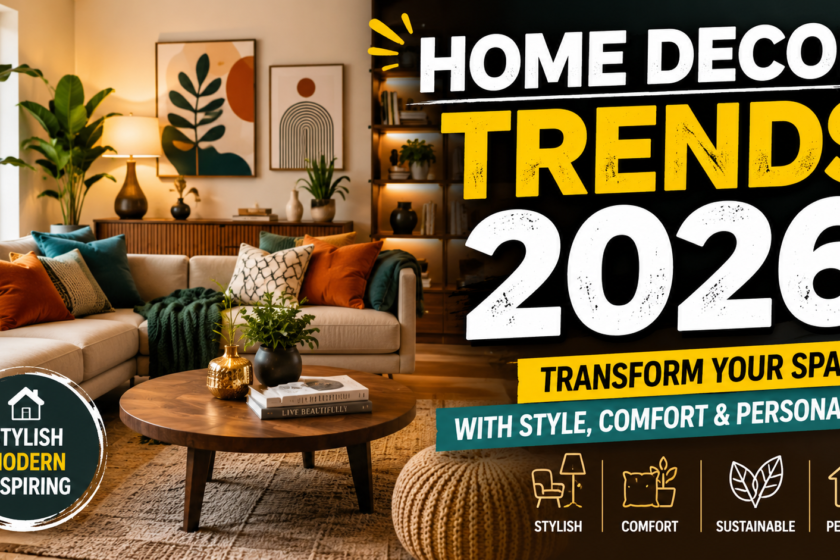
Your home is more than a structure of walls and a roof. It is your sanctuary, your creative canvas, your retreat from the outside world, and the backdrop against which the story of your daily life unfolds. In 2026, home decor has become one of the most exciting and accessible forms of self-expression. People are no longer content with cookie-cutter interiors copied from catalog pages. They want homes that reflect who they are — spaces that feel personal, intentional, and alive.
Whether you are decorating your first apartment, refreshing a family home, or completely reimagining your living space, this guide will take you through the most inspiring home decor trends of 2026 and give you practical ideas to transform any room into something extraordinary.
Cozy Maximalism: More Is More
After years of stark minimalism dominating interior design — white walls, empty surfaces, sparse furnishings — the pendulum has swung decisively in the other direction. Cozy maximalism is the defining aesthetic of 2026, and it is a joyful, warm, and deeply personal approach to decorating.
Cozy maximalism is not about clutter or chaos. It is about abundance with intention. It means filling your space with things that you genuinely love — artwork, books, textiles, ceramics, travel souvenirs, family heirlooms, and handcrafted objects — and arranging them in a way that feels curated rather than cluttered.
Layering is at the heart of this trend. Layer rugs over hardwood floors. Layer cushions and throws on sofas and beds. Layers artwork on gallery walls. Layers lighting with a mix of overhead fixtures, table lamps, floor lamps, and candles. Each layer adds depth, warmth, and visual interest to a room.
Color plays a central role in cozy maximalism. Rich jewel tones — deep emerald, sapphire blue, burnt amber, and plum — are popular choices for walls, upholstery, and accent pieces. These colors create a sense of intimacy and sophistication that cool whites and grays cannot achieve. For those who prefer a softer palette, warm earth tones — terracotta, ochre, sage green, and dusty rose — offer a similar sense of warmth and comfort.
Texture is equally important. Velvet sofas, chunky knit blankets, woven baskets, linen curtains, ceramic vases, and wooden furniture bring a tactile richness to your space that makes it feel lived-in and inviting. The goal is to create a room that engages all your senses — not just your eyes.
Biophilic Design: Bringing Nature Indoors
Biophilic design — the practice of incorporating natural elements into interior spaces — has been growing steadily for years, and in 2026, it has become a fundamental principle of home decor rather than a passing trend.
The reasoning is both aesthetic and scientific. Research consistently shows that exposure to natural elements — plants, natural light, water features, organic materials — reduces stress, improves mood, enhances creativity, and promotes better sleep. Bringing nature into your home is not just a design choice; it is a wellness strategy.
Indoor plants remain the most accessible entry point into biophilic design. From towering fiddle leaf figs to trailing pothos, from sculptural snake plants to fragrant herb gardens on kitchen windowsills, plants add life, color, and oxygen to any room. In 2026, the trend has expanded beyond individual potted plants to include living walls — vertical installations covered in lush greenery that transform blank walls into vibrant ecosystems.
Natural materials are central to biophilic interiors. Solid wood furniture, stone countertops, bamboo accessories, jute rugs, rattan chairs, and cork flooring connect your home to the natural world. These materials age beautifully, developing patinas and character over time that synthetic alternatives cannot replicate.
Natural light is the most powerful tool in biophilic design. Maximizing the amount of daylight that enters your home through unobstructed windows, sheer curtains, and strategically placed mirrors creates an uplifting atmosphere that artificial lighting alone cannot achieve. For rooms with limited natural light, full-spectrum LED bulbs that mimic daylight are a worthwhile investment.
Water features — tabletop fountains, wall-mounted water panels, and even small indoor ponds — add a soothing auditory element to your home. The gentle sound of flowing water promotes relaxation and masks unwanted noise, creating a peaceful ambiance.
Smart Home Aesthetics
Smart home technology has been advancing rapidly, and in 2026, the design community has caught up. The early days of smart homes were defined by functional but visually uninspiring gadgets — bulky speakers, visible wires, and devices that looked distinctly out of place in a well-designed room. That era is over.
Today’s smart home devices are designed with aesthetics in mind. Smart speakers blend seamlessly into bookshelves. Smarts lighting systems are hidden within architecturally beautiful fixtures. Smart thermostats look like minimalist art pieces on your wall. The technology is becoming invisible, integrated into the fabric of your home rather than imposed upon it.
Smart lighting deserves special attention. The ability to adjust the color temperature, brightness, and ambiance of your lighting with a voice command or a tap on your phone has transformed how people experience their homes. Warm, dim lighting for evening relaxation. Bright, cool lighting for focused work. Colored accent lighting for entertaining. These adjustments happen seamlessly and can be automated based on time of day, occupancy, or even your mood.
Smart window treatments — motorized blinds and curtains that adjust based on sunlight levels and time of day — enhance both energy efficiency and convenience. Imagine your blinds gently opening as the sun rises and closing as the day heats up, all without you lifting a finger.
Voice-controlled and app-managed home systems that coordinate lighting, temperature, music, security, and appliances create a living environment that anticipates your needs and adapts to your preferences. The smart home of 2026 is not just functional — it is intuitive and beautifully integrated.
Sustainable and Secondhand Furniture
Sustainability has become a defining value in home decor purchasing decisions. Consumers in 2026 are increasingly aware of the environmental impact of furniture production — deforestation, chemical treatments, transportation emissions,
and landfill waste — and are actively seeking alternatives.
Secondhand and vintage furniture has surged in popularity. Online marketplaces, local thrift stores, estate sales, and antique markets are treasure troves for unique,
well-made pieces with character and history. A vintage mid-century modern chair, a reclaimed wood dining table, or a hand-painted ceramic lamp adds personality to your home that mass-produced furniture simply cannot match.
Upcycling — the creative transformation of old or discarded items into something new and beautiful — is both an eco-friendly practice and an enjoyable creative outlet. Repainting an old dresser, reupholstering a worn armchair, converting wooden pallets into shelving,
or turning vintage suitcases into side tables are popular projects that save money and reduce waste.
When buying new furniture, consumers are gravitating toward brands that prioritize sustainable materials, ethical manufacturing, and durability. Furniture designed to last decades rather than a few years represents a shift from disposable consumption to mindful investment. Modular furniture — pieces that can be reconfigured, expanded,
or adapted as your needs change — is also gaining traction as a practical and sustainable choice.
Room-by-Room Inspiration
The living room in 2026 is designed for connection and comfort. Deep, inviting sofas anchored by layered rugs and surrounded by warm lighting create a space that draws people in. A curated gallery wall of personal photographs, artwork,
and meaningful objects serves as a conversation starter and a reflection of your story.
The bedroom has become a wellness sanctuary. Organic bedding, blackout curtains, calming color palettes, aromatherapy diffusers, and minimal electronic devices create an environment optimized for rest and rejuvenation. The bedroom is treated as sacred space — designed exclusively for sleep, intimacy, and quiet reflection.
The kitchen is the heart of the home, and in 2026, it reflects both functionality and personality. Open shelving displays beautiful dishware and cookbooks. Herb gardens grow on sunny countertops. Warm wood tones, handmade tiles, and artisan light fixtures create a space that is as inviting as it is practical.
Home offices — now a permanent feature of many homes — are designed for focus and inspiration. Ergonomic furniture, adequate lighting, organized storage, and personal touches like plants and artwork create a productive environment that does not feel sterile or corporate.
Make It Yours
The most important trend in home decor in 2026 is authenticity. Your home should tell your story — not a designer’s story, not a catalog’s story,
not a social media influencer’s story. Fill it with things that make you happy. Surround yourself with colors that energize or calm you. Create spaces that support how you actually live. Home decor is not about perfection — it is about creating a space where you feel truly, deeply at home.