
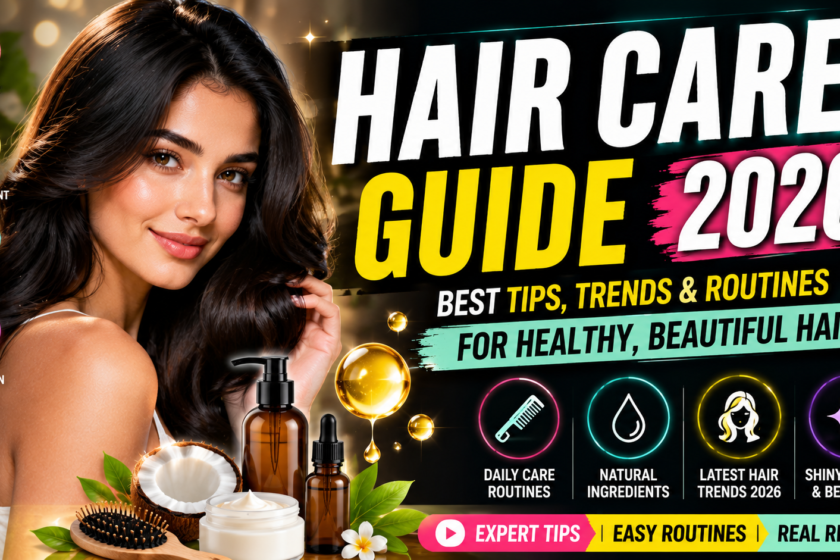
Your hair is one of the first things people notice about you. It frames your face, reflects your personality, and often serves as a barometer of your overall health. In 2026, the approach to hair care has evolved dramatically. Gone are the days of relying on harsh chemicals and one-size-fits-all products. Today, hair care is personalized, science-driven, ingredient-conscious, and deeply connected to the broader wellness movement.
Whether your hair is straight, wavy, curly, or coily — thick or fine, natural or color-treated — this guide will help you understand the latest trends, build an effective routine, and achieve the healthiest, most beautiful hair of your life.
Scalp Health: The New Foundation
The most significant paradigm shift in hair care over the past few years is the recognition that healthy hair starts with a healthy scalp. Just as skincare begins with understanding your skin type and condition, hair care in 2026 begins with scalp care.
Your scalp is living skin. It has its own microbiome — a community of bacteria and fungi that, when balanced, supports a healthy environment for hair growth. When the scalp microbiome is disrupted by harsh products, excessive washing, stress, or poor diet, the result can be dandruff, irritation, excess oiliness, dryness, and even hair thinning.
Scalp-specific products have become a major category in the hair care market. Exfoliating scalp scrubs remove buildup from product residue, dead skin cells, and environmental pollutants. Scalp serums deliver targeted ingredients — like salicylic acid for oil control, tea tree oil for antimicrobial action, or peptides for follicle stimulation — directly where they are needed most.
Scalp massagers — both manual and electric — have become popular tools. Regular scalp massage increases blood flow to the hair follicles, which can support nutrient delivery and promote healthier growth. Many people incorporate a few minutes of scalp massage into their daily routine, finding it both relaxing and beneficial for their hair.
The message is clear — if you want better hair, start by taking care of the soil from which it grows. A healthy, balanced scalp is the foundation of every great hair day.
The Ingredient Revolution
Hair care consumers in 2026 are more ingredient-savvy than ever. The blind trust in brand names and flashy packaging has been replaced by a demand for transparency and efficacy. People want to know what is in their products, what each ingredient does, and whether the formulation is appropriate for their specific hair type and concerns.
Several hero ingredients have risen to prominence this year. Rosemary oil has become one of the most talked-about natural hair care ingredients, with studies suggesting it may support hair growth and thickness comparable to some pharmaceutical treatments. It is now found in shampoos, scalp serums, and leave-in treatments across every price point.
Rice water — the starchy liquid left over from soaking or rinsing rice — has deep roots in Asian beauty traditions and has experienced a global surge in popularity. Rich in amino acids, vitamins, and minerals, rice water is credited with strengthening hair strands, improving elasticity, and adding shine. DIY rice water rinses and commercial products featuring rice water extract are widely available.
Biotin — a B vitamin essential for keratin production — remains a staple supplement and topical ingredient for those seeking to support hair strength and growth. While biotin deficiency is relatively rare, supplementation is popular among individuals experiencing thinning hair or slow growth.
Embracing Natural Texture
One of the most empowering movements in hair care is the celebration of natural texture. For decades, beauty standards in many cultures pressured individuals — particularly those with curly, coily, and textured hair — to chemically straighten or heat-style their hair into conformity. In 2026,
that narrative has been fundamentally challenged.
The natural hair movement, which has been building momentum for over a decade, is now firmly mainstream. Curly, coily, wavy, and kinky hair textures are celebrated on runways, in advertising campaigns, in professional settings, and in everyday life. Products specifically formulated for textured hair — defining creams, moisture-locking gels, co-washes, deep conditioners,
and styling butters — have exploded in availability and quality.
Understanding your hair’s specific curl pattern, porosity, density, and width is now considered essential knowledge. These characteristics determine how your hair absorbs and retains moisture,
how it responds to different products, and what styling techniques work best. Online communities and hair care professionals provide education and support for individuals on their natural hair journeys.
Protective styling — braids, twists, locs, bantu knots, and other styles that minimize manipulation and protect hair ends — continues to be both a practical hair care strategy and a powerful form of cultural expression. These styles are celebrate for their beauty, versatility,
and the deep cultural heritage they represent.
Personalized Hair Care
Just as skincare has move toward personalization, hair care in 2026 is increasingly tailor to the individual. Generic product categories — shampoo for normal hair,
conditioner for dry hair — are giving way to customized formulations based on detailed hair profiles.
Several brands now offer online quizzes and AI-powered consultations that assess your hair type, texture, scalp condition, lifestyle factors, environmental exposure, and specific goals. Based on this assessment,
a personalized set of products is formulate and ship directly to you. Some services adjust the formulation over time based on your feedback and seasonal changes.
At-home hair analysis kits are also emerging. These kits allow you to send a sample of your hair to a laboratory for detailed analysis of its protein structure, moisture balance, and mineral content. The results inform product recommendations and routine adjustments that are truly evidence-base.
This trend toward personalization reflects a broader understanding that hair care is not one-size-fits-all. What works beautifully for your friend’s hair may not work for yours, and that is perfectly normal. The goal is to find what your hair specifically needs and build a routine around that knowledge.
Sustainable Hair Care Choices
Sustainability has become a core consideration in hair care purchasing decisions. Consumers in 2026 want products that are effective for their hair and responsible for the planet.
Waterless hair care products — shampoo bars, dry conditioners, powdered treatments — reduce water usage in both manufacturing and shipping. Concentrated formulas that require less product per use also minimize waste and packaging.
Refillable packaging systems are gaining traction among premium and indie brands alike. Instead of throwing away an empty bottle, you purchase a refill pouch or visit a refill station. This model significantly reduces plastic waste without compromising product quality or user experience.
Ethically sourced ingredients, cruelty-free testing practices, and transparent supply chains are increasingly important to consumers. Brands that can demonstrate genuine commitment to sustainability — not just surface-level greenwashing — earn customer loyalty and advocacy.
Your Hair, Your Crown
hair care guide 2026 is about understanding, respecting, and celebrating your unique hair. It is about nourishing your scalp, choosing intelligent ingredients,
embracing your natural texture, and making choices that are good for both you and the planet. Your hair is your crown — and with the right knowledge and care, it can be the healthiest, most radiant expression of who you are.