
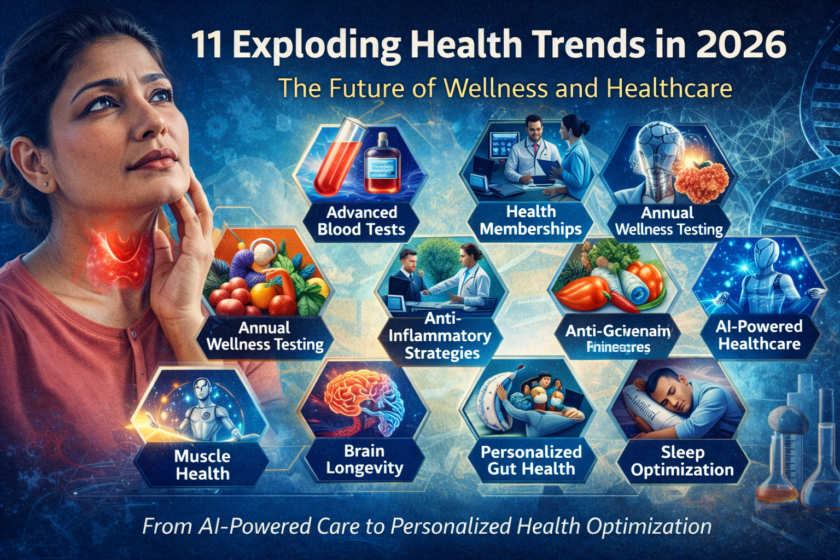
Health Trends 2026 wellness world isn’t just evolving—it’s sprinting. What used to be considered “extra” health habits are quickly becoming everyday essentials. Annual checkups? No longer enough. Generic advice? People want personalization. Guesswork? Replaced by data, tech, and smarter prevention.
As we move toward Health Trends 2026 , health is no longer about reacting when something goes wrong. It’s about staying ten steps ahead. Think of it like upgrading from an old paper map to real-time GPS for your body. You don’t wait until you’re lost—you course-correct early.
From smarter blood tests and AI-powered wearables to muscle-focused fitness and brain longevity, here are the 11 health trends set to explode in 2026—and why they matter to you.
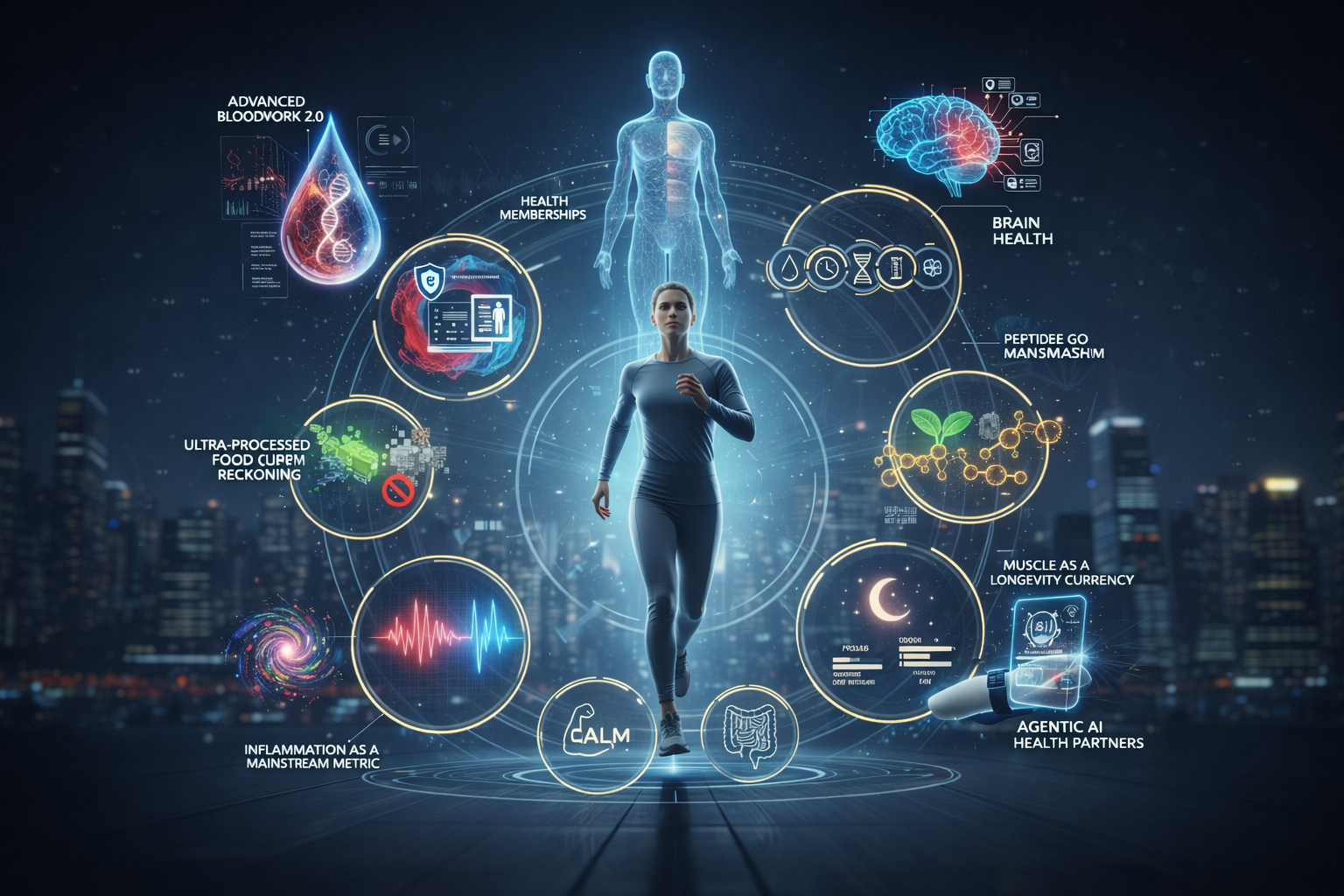
1. Blood Tests Are Getting a Serious Upgrade
That basic blood panel you get once a year? It’s starting to feel like checking the weather with yesterday’s forecast.
In 2026, people are demanding advanced bloodwork that goes far beyond cholesterol and vitamin D. We’re talking insulin resistance, inflammation markers, hormone balance, metabolic health, even genetic risk insights.
Why the shift? Because symptoms usually show up after damage begins. Advanced labs help spot problems early—before fatigue, weight gain, or chronic illness creep in.
Tracking these markers over time also helps people see what’s working. Change your diet? Improve sleep? Start strength training? Your bloodwork becomes the scoreboard.
2. Health Memberships Replace Traditional Doctor Visits
Waiting weeks to see a doctor is starting to feel outdated—like waiting for dial-up internet to connect.
In 2026, health memberships are becoming the new normal. Instead of one rushed visit a year, people want ongoing access, real conversations, and proactive care.
These memberships often include:
-
On-demand telehealth
-
Personalized health dashboards
-
Regular testing and imaging
-
Health coaching and trend tracking
It’s healthcare that works with you, not just for you—like having a long-term health partner instead of a once-a-year acquaintance.
3. Annual Testing Becomes a Personal Health Ritual
Annual physicals aren’t going away—but they are being redefined.
People are now building annual health rituals, combining bloodwork, imaging, body composition analysis, and biological age testing. The goal? Detect subtle changes before symptoms appear.
Instead of asking, “Am I sick?” the new question is, “Am I improving?”
This proactive mindset is fueling explosive growth in precision diagnostics and whole-body health scans, making prevention the main event—not an afterthought.
4. Ultra-Processed Foods Face a Reckoning
Calories and macros are no longer the main villains. The spotlight is now on how processed your food is.
Ultra-processed foods have been linked to:
-
Higher mortality risk
-
Faster cognitive decline
-
Metabolic syndrome
-
Chronic inflammation
In 2026, the big question won’t be “How much sugar?” but “How far is this food from its original form?”
Expect clearer labels, policy debates, and a cultural shift redefining what we call “junk food.” Whole foods are back in the driver’s seat—and processed shortcuts are losing their shine.
5. Inflammation Becomes the Main Health Conversation
If disease had a common language, inflammation would be it.
Chronic, low-grade inflammation is now linked to heart disease, cancer, autoimmune disorders, and even accelerated aging. And people are done ignoring it.
In 2026, individuals are actively measuring inflammation through advanced blood markers and managing it through:
-
Anti-inflammatory diets
-
Stress reduction
-
Meditation and breathwork
-
Sleep optimization
-
Recovery tracking via wearables
Think of inflammation like background noise. Lower it, and everything—from energy to focus—sounds clearer.
6. Peptides Move Into the Mainstream
Peptides are no longer just a niche biohacking topic—they’re entering everyday wellness conversations.
From metabolic support and muscle recovery to immune health and anti-aging, peptides are being explored at a rapid pace. But here’s the catch: not all peptides are regulated or approved.
In 2026, expect clearer guidelines, more research, and wider acceptance—along with stronger warnings against unsafe or illegal use. Knowledge, not hype, will separate smart adoption from risky shortcuts.
7. Muscle Becomes a Core Health Metric
Muscle isn’t just about aesthetics anymore—it’s about metabolic survival.
Low muscle mass is now strongly linked to insulin resistance, poor metabolic health, and aging-related decline. That’s why 2026 fitness goals look different.
People are focusing on:
-
Strength training
-
Protein timing
-
Grip strength
-
Lean mass preservation
Especially for those using weight-loss medications, maintaining muscle is critical. The scale alone doesn’t tell the story anymore—body composition does.
8. Brain Health Is the New Wealth
Longevity isn’t just about living longer—it’s about staying sharp while doing it.
In 2026, brain health takes center stage. People are investing in cognitive resilience through:
-
Exercise and sleep optimization
-
Stress management
-
Cognitive training apps
-
Neurofeedback and brain tracking
-
Nootropics and functional nutrition
Instead of assuming cognitive decline is inevitable, people are training their brains like muscles—consistently and intentionally.
9. Gut Health Gets Personal
The gut microbiome is no longer treated as a mystery—it’s becoming a personalized roadmap.
Research shows gut bacteria influence metabolism, mood, inflammation, and chronic disease risk. That’s why generic probiotics are losing appeal.
In 2026, expect:
-
Personalized gut testing
-
Targeted probiotics and prebiotics
-
Nutrition plans based on microbiome data
Your gut isn’t just digesting food—it’s helping decide how your body functions. And people want solutions tailored to their unique ecosystem.
10. Sleep Optimization Takes the Spotlight
Sleep has officially graduated from “nice to have” to non-negotiable.
With strong links to heart disease, immune health, metabolism, and brain function, sleep optimization is booming. Wearables now track sleep stages, HRV, and recovery—turning rest into measurable data.
Expect more:
-
AI-powered sleep coaching
-
Smart bedrooms and hotels
-
Light and temperature therapy
-
Sleep-supporting supplements
In 2026, bragging about being sleep-deprived won’t be cool—it’ll be a red flag.
11. AI Becomes Your Personal Health Partner
Artificial intelligence is stepping out of the background and onto center stage.
In 2026, AI will:
-
Assist doctors in disease detection
-
Speed up drug development
-
Analyze scans with higher precision
-
Power smarter wearables and diagnostics
Instead of just showing numbers, AI will interpret them—offering predictions, insights, and personalized recommendations. Think of it as a health coach on your wrist, working 24/7.
Conclusion
The biggest shift heading into Health Trends 2026 isn’t a single trend—it’s a mindset.
Health is no longer reactive. It’s intentional. Data-driven. Personalized. And deeply connected to daily life choices.
People aren’t waiting to feel unwell before acting. They’re optimizing, tracking, adjusting, and investing in long-term wellbeing—one smart decision at a time.
If there’s one takeaway, it’s this: the future of health belongs to those who stay curious, informed, and proactive.
Health Trends 2026, wellness won’t be about perfection—it’ll be about awareness. Not chasing trends, but understanding your body like never before.
Your health story is becoming more precise, more personal, and more empowering. And honestly? That’s a future worth getting excited about.