

increase hair density naturally, Hair thinning rarely arrives with warning bells. It doesn’t crash into your life dramatically. It tiptoes in. One extra strand on your pillow. A slightly wider parting. A ponytail that feels… lighter. Before you know it, you’re staring at your reflection, tilting your head under different lights, and wondering when your hair stopped feeling like your hair.
If this sounds familiar, you’re not alone. increase hair density naturally
For many people in India, hair density issues start earlier than expected. Pollution, dust, stress, hormonal shifts, poor sleep, crash diets, excessive styling, and chemical treatments all gang up on our hair. Add hard water and hectic routines, and your scalp barely gets a break.
The good news? You don’t need miracle serums, expensive clinic treatments, or viral hacks that promise overnight results. Increasing hair density naturally is possible — but it’s a slow, steady process built on consistency, not magic.
Let’s break it down honestly, practically, and without unrealistic promises.
Why Hair Density Drops in the First Place
Before fixing the problem, it helps to understand it.
Hair density usually drops because:
- Hair growth slows down
- Hair fall increases
- Hair breakage outpaces new growth
Sometimes it’s nutritional hormonal, just years of mistreating hair without realizing it.
Think of your hair like a plant. You can’t expect thick leaves if the soil is dry, the roots are stressed, and the plant is constantly being yanked around.
So instead of chasing shortcuts, let’s focus on strengthening the foundation.
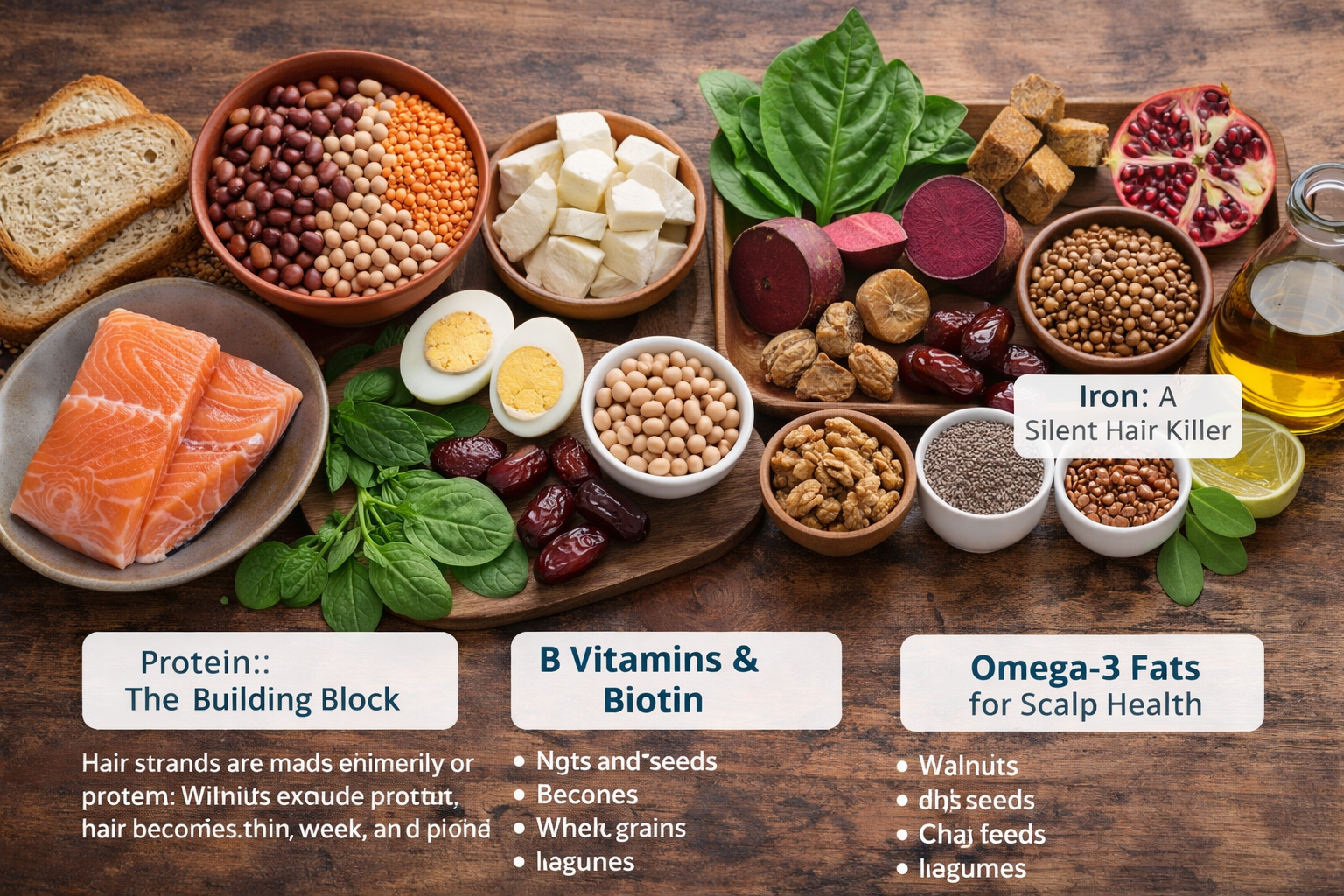
Tip 1: Eat Like Your Hair Depends on It (Because It Does)
Let’s clear up one uncomfortable truth early:
No oil, mask, or serum can compensate for poor nutrition.
Hair is built from what you eat. If your body is running low on nutrients, it prioritizes survival over beauty — and hair growth is one of the first things to slow down.
Key Nutrients Your Hair Needs for Density
Protein: The Building Block
Hair strands are made primarily of protein. Without enough protein, hair becomes thin, weak, and prone to breakage. increase hair density naturally
Include:
- Dal, rajma, chana
- Paneer and curd
- Eggs
- Soy products
- Peanuts and seeds
- Fish, if you eat it
You don’t need protein powders. Just consistent, daily intake.
Iron: A Silent Hair Killer
Iron deficiency is one of the most common reasons for hair thinning, especially among Indian women, supports oxygen flow to hair follicles. Low iron = weak roots.
Add:
- Spinach and leafy greens
- Beetroot
- Dates and jaggery
- Pomegranate
- Lentils
Pair iron-rich foods with vitamin C sources (like lemon or amla) for better absorption.
B Vitamins and Biotin
These support hair growth, strength, and texture.
Found in:
- Nuts and seeds
- Bananas
- Whole grains
- Legumes
Healthy Fats for Scalp Health
A dry, irritated scalp struggles to grow thick hair.
Get omega-3 fats from:
- Walnuts
- Flaxseeds
- Chia seeds
- Mustard oil
- Small fatty fish
Simple Upgrade That Works
No complicated diet plans. Just do this:
- Add one protein source
- Add one iron-rich food
- Drink more water
That’s it. Consistency beats complexity.
Tip 2: Scalp Massage — Old-School, Effective, and Underrated
That oil massage your grandmother insisted on? Turns out she knew what she was doing.
A proper scalp massage improves blood circulation to hair follicles. Better circulation means more oxygen and nutrients reach the roots — creating a healthier environment for hair growth.
How to Massage the Right Way
- Use fingertips, not nails
- Gentle circular motions
- 5–10 minutes is enough
- 3–4 times a week
More pressure doesn’t mean better results. Be kind to your scalp.
Best Oils for Hair Density
- Coconut oil: Reliable and suits most hair types
- Castor oil: Great for thickness (always dilute)
- Almond oil: Ideal for dry, brittle hair
- Bhringraj oil: Traditional Ayurvedic favorite
Simple DIY Oil Mix
Warm coconut oil + a few drops of castor oil + crushed kalonji seeds.
Massage gently, leave overnight, wash in the morning.
Pro tip: It’s not the oil that works wonders — it’s the regular massage.
Tip 3: Stop Breaking Your Hair Faster Than It Can Grow
Here’s something many people miss:
Sometimes hair looks thinner not because it’s not growing, but because it’s breaking constantly.
Daily habits quietly destroy density.
Common Hair-Damaging Habits
- Tight ponytails and buns
- Brushing wet hair aggressively
- Excessive heat styling
- Skipping conditioner
- Washing with harsh shampoos too often
Small Changes, Big Difference
- Use a wide-tooth comb on wet hair
- Avoid tight hairstyles every day
- Reduce straightener and curler use
- Switch to a mild shampoo if you wash frequently
- Always condition the lengths (not the scalp)
Desi Sleep Hack
Sleep on a soft cotton dupatta or silk scarf instead of rough pillowcases. Less friction means less breakage — and over time, fuller hair.
Tip 4: Healthy Scalp = Thicker Hair
You can’t grow dense hair on an unhappy scalp.
If your scalp is itchy, flaky, greasy, or inflamed, your follicles are already under stress.
Common Scalp Problems in India
- Dandruff due to humidity
- Product buildup from oils and serums
- Sweat and pollution clogging follicles
Natural Scalp Fixes
- Aloe vera gel: Calms irritation and soothes skin
- Neem water rinse: Helps with dandruff and itching
- Onion juice: Smells terrible, works for some people — once a week is enough
Important Reality Check
If dandruff is severe, hair fall is sudden, or the scalp is red and painful — stop experimenting. A dermatologist visit can prevent long-term damage.
Tip 5: Reduce Stress and Sleep Better (Your Hair Is Watching)
This part isn’t glamorous, but it’s crucial.
Stress pushes hair into the shedding phase. Late nights, emotional overload, constant screen exposure — your scalp feels all of it.
How Stress Impacts Hair Density
- Disrupts growth cycles
- Increases shedding
- Slows regrowth
Tiny Lifestyle Tweaks That Help
- Aim for 7 hours of sleep
- Move your body daily — even a walk helps
- Practice simple breathing exercises
- Avoid crash dieting
- Don’t skip meals
Be Gentle With Yourself
Hair fall increases during exams, postpartum recovery, illness, grief, or work stress. Hair recovery takes time — but it usually happens when the body stabilizes.
What Results Can You Realistically Expect?
Let’s be honest.
If someone promises thicker hair in 7 days — walk away.
Realistic Timeline
- 1–2 months: Reduced hair fall, healthier scalp
- 3–4 months: Baby hairs appear
- 6 months and beyond: Visible improvement in density
Hair growth is a long game. Patience is part of the process.
Consistency Is the Real Secret
There’s no single product that fixes hair density. It’s the sum of daily habits.
Thicker hair comes from:
- Eating better
- Treating your scalp kindly
- Reducing breakage
- Sleeping well
- Managing stress
- Staying consistent
Your hair reflects how you treat your body — not just your scalp.
Think of increase hair density naturally like fitness—you don’t get stronger from one workout, and you don’t lose strength from missing one day. It’s the quiet repetition of good habits that adds up over time. Even small, boring routines done daily often outperform fancy products used occasionally.
When you nourish your body, rest properly, and stop fighting your hair with harsh practices, your scalp gets the signal that it’s safe to grow. And when the body feels supported, hair growth follows naturally—slowly, steadily, and sustainably.
Conclusion
Increasing hair density naturally isn’t about chasing trends or miracle cures. It’s about showing up for your hair the same way you would for your health — patiently, consistently, and realistically.
You don’t need perfection. You need persistence.
Start small. Stick with it. Give your follicles time to respond.
Your hair isn’t failing you. It’s responding to how life has been treating you.
Feed yourself well. Slow down when you can. Be gentler — with your scalp and with yourself. Thick, healthy hair often follows when the body feels safe enough to grow it.