
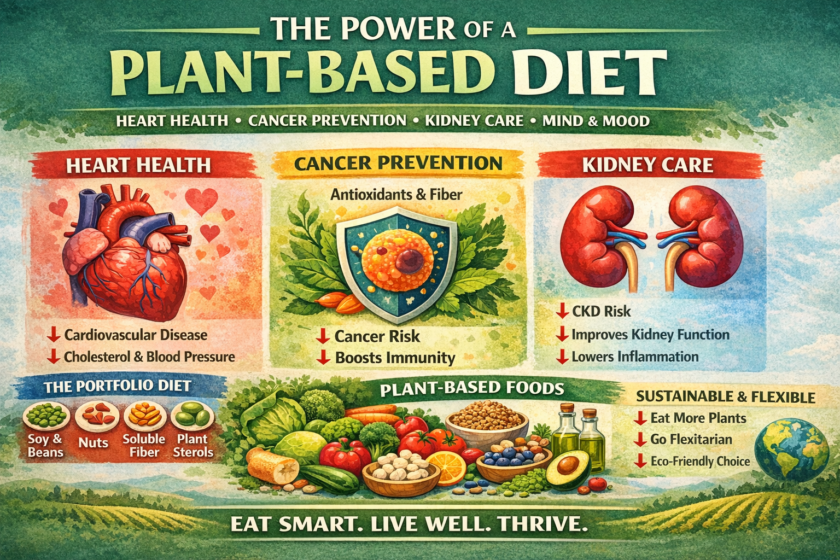
Plant-Based Diet, Let’s be honest—food isn’t just fuel anymore. It’s medicine, mood-lifter, and, in some ways, a superpower. Recent research is showing that a plant-based diet may not only improve your overall wellness but could also reduce the risk of serious health conditions like heart disease, cancer, and chronic kidney disease (CKD).
From swapping out meat for lentils to embracing whole grains and leafy greens, plant-based eating is proving that what you put on your plate matters as much as how much you move. But how exactly does this diet impact your body, and why should it matter to you? Let’s dig in.
What Is a Plant-Based Diet?
First things first—what does “plant-based” even mean? A plant-based diet focuses primarily on foods that come from plants. That’s not just fruits and vegetables—it also includes:
- Nuts and seeds
- Legumes (beans, lentils, chickpeas)
- Whole grains
- Healthy plant oils
Here’s the kicker: plant-based doesn’t necessarily mean vegan. You don’t have to eliminate meat or dairy entirely. The idea is simply to make plants the stars of your meals. The more you lean on plants, the better the benefits—without feeling deprived.
Plant-Based Diets and Cancer Prevention
Cancer prevention is a big draw for people shifting to a plant-forward lifestyle. According to a 2024 review of nearly 48 studies spanning 23 years, vegetarian and vegan diets can reduce the risk of:
- Prostate cancer
- Gastrointestinal cancers
- Heart disease
This isn’t magic—it’s science. Plant-based diets are packed with antioxidants, fiber, and anti-inflammatory compounds that help protect your cells from damage.
Bonus perks: These diets may also improve cardiometabolic health markers such as:
- Blood sugar levels
- Cholesterol and lipid profiles
- Body mass index (BMI)
- Inflammation
That said, experts caution that strictly vegetarian or vegan diets can sometimes lack certain nutrients, like vitamin B12, Vitamin D, iodine, and essential fatty acids like EPA and DHA.
“A flexitarian approach—mostly plant-based but with occasional meat or dairy—might be a safer, nutrient-complete option,” says Faith Krisht, a registered dietitian nutritionist.
Heart Health Benefits: The Portfolio Diet
Heart disease remains one of the top causes of death worldwide. Enter the Portfolio diet, a plant-based approach that is showing remarkable results for cardiovascular health.
A 2025 study revealed that moderate adherence to the Portfolio diet can:
- Lower risk of cardiovascular disease by 12%
- Reduce coronary heart disease mortality by 14%
- Decrease overall mortality by 12%
Better yet, the closer people stick to the diet, the more powerful the benefits:
- Cardiovascular disease mortality drops 16%
- Coronary heart disease mortality falls 18%
- Overall mortality decreases 14%
What Makes the Portfolio Diet Special?
The diet focuses on four cholesterol-lowering food categories:
- Soy/plant proteins: Replaces saturated fats while lowering cholesterol.
- Plant sterols: Blocks cholesterol absorption.
- Tree nuts: Offer heart-healthy unsaturated fats.
- Soluble fiber: Binds and removes bile and cholesterol.
“Combining these foods creates an additive effect on lowering LDL cholesterol,” explains Erin Sheenan, cardiovascular dietitian.
Think of it like building a fortress around your heart—each food adds a brick.
Kidney Health and Plant-Forward Eating
Chronic kidney disease affects roughly 10% of the global population and is projected to become the fifth leading cause of death by 2040. But a plant-forward diet might just help.
A recent study using UK Biobank data (179,508 participants aged 40–69) found that adherence to the EAT-Lancet planetary diet was associated with a reduced risk of CKD. Over a 12-year median follow-up, 2.7% of participants developed CKD.
Why It Works
Plant-based foods—especially legumes, vegetables, and nuts—are rich in:
- Fiber
- Potassium and magnesium
- Antioxidants and plant compounds
These nutrients help reduce inflammation, oxidative stress, and the dietary acid load that can strain kidneys over time.
“Better control of blood pressure, cholesterol, and blood sugar helps reduce pressure inside the kidneys’ filtering units,” says Michelle Routhenstein, preventive cardiovascular dietitian.
The Gut-Brain Connection: How Plants Fuel Your Mental Health
While the physical benefits of a plant-based diet for the heart and kidneys are well-documented, 2026 research is shedding light on a new frontier: The Gut-Brain Axis. Your gut is often called your “second brain,” and what you eat directly influences your mood, focus, and mental clarity.
- The Fiber-Serotonin Link: Did you know that about 95% of your body’s serotonin (the “feel-good” hormone) is produced in your gut? Plant-based diets are naturally high in prebiotic fibers that feed the beneficial bacteria in your microbiome. These bacteria, in turn, signal your brain to regulate mood and reduce symptoms of anxiety.
- Fighting Neuro-Inflammation: Chronic inflammation isn’t just bad for your joints; it’s bad for your brain. High-meat diets are often linked to neuro-inflammation, which can lead to “brain fog” and increased risk of cognitive decline. The phytonutrients found in berries, walnuts, and leafy greens act as natural shields, protecting your brain cells from oxidative stress.
- The Dopamine Balance: Unlike processed foods and refined sugars that cause dopamine spikes and subsequent “crashes,” complex carbohydrates from whole grains provide a steady supply of energy to the brain. This results in stable moods and better concentration throughout the day.
By shifting to a plant-forward lifestyle, you aren’t just saving your heart and kidneys—you are literally feeding your happiness and protecting your mental longevity.
Flexibility: Not All Plant-Based Diets Are Equal
Plant-based diets can take multiple forms:
- Vegan: No animal products.
- Vegetarian: No meat, but may include dairy or eggs.
- Flexitarian: Mostly plant-based with occasional animal products.
- Plant-forward: Prioritizes plant foods but allows moderate animal products.
The takeaway? You don’t have to go full vegan to reap health benefits. Even partial adherence can improve heart health, reduce cancer risk, and protect kidneys.
Real-Life Examples: Making It Work Daily
Incorporating plant-based eating into daily life doesn’t have to be hard. Here are some practical swaps:
- Breakfast: Oatmeal with nuts and berries instead of sugary cereal.
- Lunch: Lentil salad or chickpea wraps instead of deli meat sandwiches.
- Snacks: Almonds, pumpkin seeds, or hummus with veggies.
- Dinner: Stir-fried vegetables with tofu or a bean chili instead of red meat.
Consistency is more important than perfection. Even one plant-forward meal a day can start moving the needle on your health.
The Science Behind Plant-Based Benefits
Researchers have explored several mechanisms for why plant-based diets are protective:
- Anti-inflammatory compounds: Reduce chronic inflammation linked to heart disease and cancer.
- Improved gut microbiome: Fiber-rich diets feed beneficial bacteria, improving digestion and immunity.
- Better blood sugar control: Lower glycemic loads reduce insulin spikes.
- Healthy weight management: Plant foods are nutrient-dense and lower in calories.
Think of it as tuning your body’s engine—you feed it high-quality fuel, and it performs better.
Plant-Based Diets and Lifestyle Integration
Eating plant-based isn’t just about health—it can also be sustainable and environmentally friendly. Diets like the EAT-Lancet planetary diet consider both human and environmental health, balancing plant foods with minimal animal products while limiting added sugars and processed fats.
- Reduces greenhouse gas emissions
- Conserves water and soil resources
- Encourages sustainable protein sources
It’s a win-win for your body and the planet.
Conclusion
The research is clear: plant-based and plant-forward diets can reduce the risk of heart disease, cancer, and kidney disease. From the Portfolio diet for your heart to the EAT-Lancet planetary diet for your kidneys, plants have proven their power.
Even if going fully vegan isn’t for you, incorporating more legumes, whole grains, nuts, seeds, fruits, and vegetables—and occasionally enjoying animal products—can bring substantial benefits.
It’s not about restriction—it’s about empowerment. Every plant-forward choice you make is a step toward a healthier, longer, and more vibrant life.
Plant-based eating isn’t a trend; it’s a lifestyle with measurable, real-world benefits. By prioritizing plants, you’re protecting your heart, reducing cancer risk, and safeguarding your kidneys—all while feeling energetic and vibrant. Start small, stay consistent, and let the plants do the heavy lifting.