
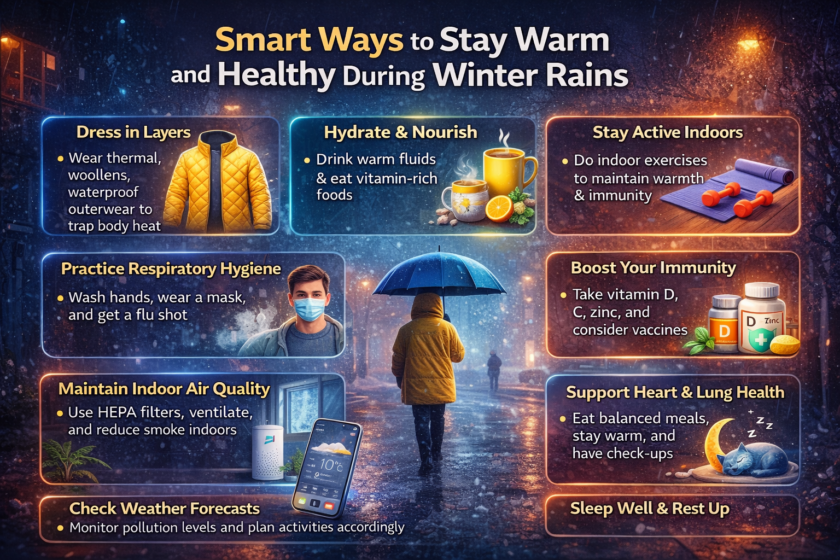
Winter rains in North India bring a refreshing break from smog and dust, but they also introduce a host of challenges. Chilly temperatures, dense fog, and pollution make this season tricky for your health. From respiratory issues to heart strain, winter rains demand more than just bundling up. In this guide, we’ll show you practical, science-backed tips to stay warm, boost your immunity, and enjoy the season safely—so you can embrace the rains without compromise.
Winter rains are a double-edged sword. While they bring relief from the relentless smog and dust that often blanket cities like Delhi NCR, they also introduce their own set of challenges—plummeting temperatures, dense fog, and respiratory hazards. With winter rains sweeping across North India, residents face a delicate balancing act: enjoying the freshness of the rain while staying safe and healthy.
So, how can you embrace the winter rain without compromising your health? Let’s dive into the science, the practical tips, and the lifestyle tweaks that can help you navigate this chilly, damp season.
Why Winter Rains Can Be Risky for Your Health
At first glance, rain seems harmless, even refreshing. But in combination with fog, pollution, and cold temperatures, it can have serious effects on your health.
Poisonous Fog and Respiratory Concerns
Winter rains often mix with fog and suspended pollutants, creating a toxic haze sometimes referred to as “poisonous fog.” This thick mix of particulate matter (PM2.5) clings to water droplets and infiltrates the lungs, causing inflammation, irritation, and increasing the risk of respiratory problems.
People with asthma, bronchitis, or other chronic lung conditions may find their symptoms worsened during these damp spells. Even healthy individuals can experience coughing, wheezing, and shortness of breath.
Cold Air and Its Hidden Dangers
Cold temperatures cause your airways to constrict, slow down mucus clearance, and weaken your natural defense mechanisms. The result? A respiratory system that’s more vulnerable to viruses, infections, and environmental irritants.
Fog, Pollution, and Cardiovascular Strain
When winter rains coincide with fog, low wind conditions trap pollutants near the ground. This combination doesn’t just affect your lungs—it puts stress on your cardiovascular system, particularly for the elderly, children, and those with pre-existing heart conditions.
Dress Smart: Layer Up to Keep Warm
One of the simplest yet most effective ways to stay healthy during winter rains is proper clothing.
The Power of Layers
Cold, wet weather draws heat away from your body faster than you might expect. Multiple layers—including thermal innerwear, woollen sweaters, and a waterproof outer jacket—help trap body heat.
Don’t forget gloves, scarves, socks, and even hats. Extremities lose heat quickly, and keeping them warm is crucial to prevent frostbite and maintain overall body warmth.
Tip: Opt for water-resistant outer layers to stay dry, and remove damp layers promptly indoors to avoid catching a chill.
Hydrate and Nourish Your Body
Winter often tricks us into drinking less water because we don’t feel as thirsty. But hydration is key for keeping mucus membranes moist and your circulation healthy.
Warm Fluids for Extra Comfort
Drinking herbal teas, warm soups, or simply warm water can help keep your respiratory system lubricated and flush out toxins. Plus, it’s comforting when temperatures drop!
Boost Immunity Through Diet
Nutrition plays a huge role in winter health. Foods rich in vitamin C (citrus fruits, leafy greens), zinc (nuts, seeds), and vitamin D (fortified foods) help strengthen your immune system and fend off seasonal viruses.
Stay Active Indoors
Even if the rains and cold keep you inside, physical activity is crucial.
-
Indoor Exercises: Simple stretching, yoga, or bodyweight workouts keep circulation active.
-
Movement Helps Immunity: Regular activity stimulates the immune system and helps maintain body warmth.
-
Mental Health Boost: Exercise also combats the winter blues caused by reduced sunlight and social activity.
Practice Good Respiratory Hygiene
Winter rains increase the spread of respiratory viruses. Simple hygiene habits can make a big difference:
-
Wash hands frequently
-
Cover your mouth and nose when sneezing or coughing
-
Avoid close contact with sick individuals
Pro tip: Getting a flu vaccine during winter months can dramatically reduce the risk of severe influenza.
Maintain Indoor Air Quality
With people spending more time indoors during cold, rainy weather, indoor air quality becomes essential.
-
Ventilation: Open windows when possible to allow fresh air circulation.
-
Air Purifiers: HEPA filters can remove fine particles from indoor air.
-
Reduce Smoke: Avoid indoor smoking and minimize the use of stoves or heaters that produce smoke.
Clean air indoors can protect sensitive lungs and reduce respiratory irritation.
Support Heart and Lung Health
Cold weather isn’t just a nuisance; it stresses your heart.
-
Vasoconstriction: Cold air narrows blood vessels, increasing blood pressure and heart strain.
-
Diet and Warmth: Eating balanced meals, staying hydrated, and wearing warm clothing help reduce this stress.
-
Medical Check-Ups: Regular monitoring for people with preexisting conditions is key during winter months.
Why Winter Pollution Makes Rains Riskier
winter rains in North India can temporarily clear smog, stagnant fog often traps pollutants near the ground. This effect is compounded by temperature inversions and low wind speeds, common during North Indian winters.
The result: a brief relief followed by increased exposure to toxic air, which aggravates respiratory and cardiovascular conditions.
Smart Lifestyle Adjustments for Winter Wellness
Adapting to winter rains is not just about clothing and diet—it’s about your overall routine.
-
Sleep Well: Adequate rest supports immunity.
-
Mind Your Mental Health: Seasonal depression can strike when sunlight is scarce. Light therapy and indoor hobbies help.
-
Limit Outdoor Exposure: When pollution and fog are at their worst, avoid outdoor activities, especially for vulnerable groups.
Boost Your Immunity Through Preventive Measures
Prevention is always better than cure, particularly during the winter season.
-
Vaccinations: Flu shots and pneumococcal vaccines for at-risk groups.
-
Supplements: Consider vitamin D or multivitamins during low sunlight months.
-
Hand Hygiene: Essential to stop viral transmission.
By combining these measures with smart clothing and nutrition, you reduce the chances of falling ill during rainy winters.
The Role of Weather Awareness
Knowing what the weather holds can help you prepare:
-
Check Forecasts: Plan outdoor activities around rain-free windows.
-
Monitor Pollution Levels: Air quality indices help you decide whether it’s safe to step out.
-
Adapt Clothing and Travel: Carry umbrellas, wear waterproof footwear, and keep dry to avoid chills.
Conclusion
winter rains in North India don’t have to spell discomfort or illness. By layering your clothes, staying hydrated, maintaining indoor air quality, and adopting preventive health habits, you can enjoy this season safely.
Think of it like learning to dance in the rain: with the right rhythm, you won’t just survive the winter—you’ll thrive. A proactive approach, backed by science and common sense, is your best defense against the cold, damp, and foggy days ahead.
Remember: your body is your temple, and winter rains are just another test of resilience. Prepare wisely, stay warm, and enjoy the freshness that comes with the season.